

Origin of the name and location
The name leaves nothing to the imagination: Devil’s Cave (Grotta del Diavolo). It owes this to the unsettling sounds that emerge when the wind and sea rush simultaneously into the crevices of the rock. These are long, deep wails—sometimes resembling howls—that the old inhabitants of Leuca attributed to demonic presences hidden in the heart of the mountain. There is no demon, of course—only compressed air vibrating through narrow tunnels—but the effect, especially on winter evenings, remains impressive.
The cave opens on the promontory of Punta Ristola, the southernmost point of Puglia, on the West side (Ponente). It has dual accessibility: an upper cavity reachable by land from the promontory, and a lower opening that faces directly onto the sea. The two parts are connected by a steep and narrow internal passage.
Discover all the caves of Santa Maria di Leuca in our complete guide.
What makes this cave special
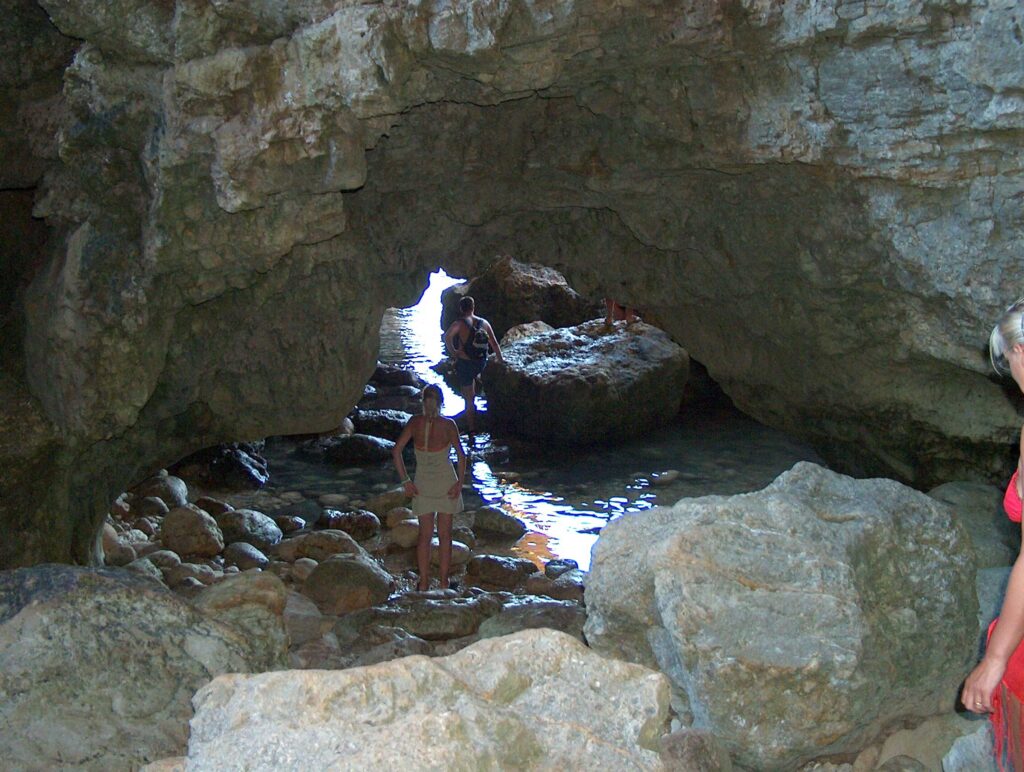
The Devil’s Cave is not just a legend; it is one of the most important archaeological sites in lower Salento. Inside, bone remains, ceramic fragments, and stone tools have been found, testifying to human presence dating back to the Paleolithic. Humans lived here tens of thousands of years ago, protected by the rock and overlooking the sea.
The atmosphere is unlike any other cave on the coast. The interior is gloomy, with dark, damp walls that absorb the light. The passage between the upper and lower parts is narrow and requires care. However, when you reach the opening to the sea, the contrast is spectacular: the darkness of the cave suddenly opens onto the turquoise of the Ionian Sea, with the white cliffs framing the view.
The “wails” are heard mainly with rough seas and westerly winds. The air enters through the lower opening, travels through the internal tunnels, and exits through the upper crevices, creating sound vibrations that change tone depending on the intensity of the wind. It is a natural organ carved into the rock.
How to visit the Devil’s Cave
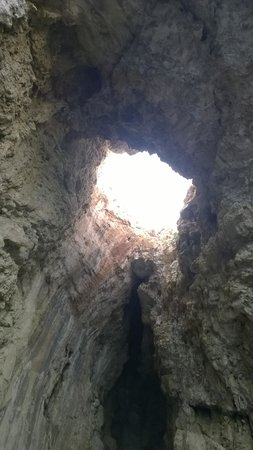
The Devil’s Cave can be reached both by land and by sea. From land, a path starts from the Punta Ristola promontory and descends to the upper entrance of the cavity. The path is not officially marked and has some difficult stretches: hiking shoes and a minimum of experience are required. Access is free and open.
By sea, excursion boats pass in front of the lower opening, and the captain tells the history and legends of the cave. When the sea is calm, some boats get close enough to see the inside of the cavity from the water.
Boat excursions that pass the Devil’s Cave:
- 3-hour double-side tour — covers the entire coast, passing the Devil’s Cave on the Ionian side
- Sunset tour — the low light makes the cave opening even more suggestive
Frequently Asked Questions about the Devil’s Cave
Where is the Devil’s Cave located?
On the Punta Ristola promontory, on the West side (Ponente) of Santa Maria di Leuca. It has an upper entrance reachable by land and a lower opening facing the sea.
Why is it called the Devil’s Cave?
Because of the unsettling sounds it produces when wind and sea enter the rock crevices. The compressed air creates wails and howls that Leuca’s inhabitants used to attribute to demonic presences.
What was found in the cave?
Bone remains, ceramic fragments, and stone tools dating back to the Paleolithic. The cave is one of the most important archaeological sites in lower Salento, documenting human activity over tens of thousands of years.
Can it be visited on foot?
Yes, via an unmarked path that descends from the Punta Ristola promontory. Access is free, but requires hiking shoes and caution on the steeper sections.
Which excursions see it from the boat?
During the 3-hour double-side tour and the sunset tour. The boat passes in front of the sea opening, and the captain shares the cave’s history.
Where do the excursions depart from?
From the Port of Santa Maria di Leuca. The meeting point is the Bar del Porto, where you should arrive 15-30 minutes before departure.